Get dsh-browser on macOS and Linux Now!
Installed with a shell one-liner. Open source, with a documented setup.
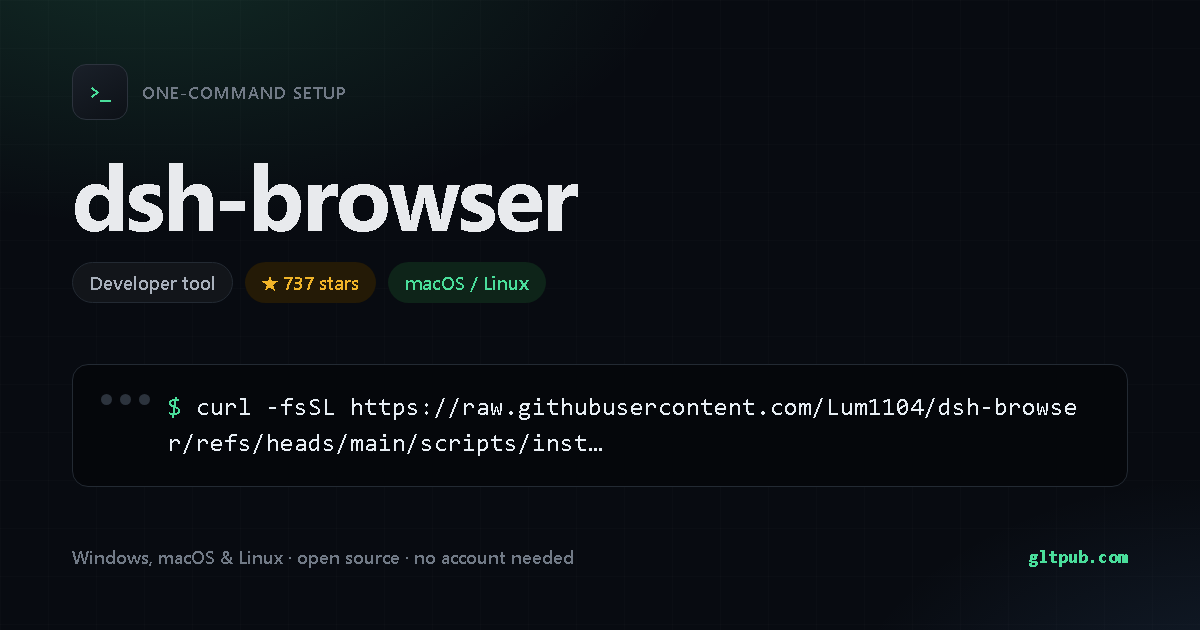
Get dsh-browser with one command
Pick your system, reveal the step-by-step guide, copy the command, paste it into your terminal and press Enter. This command was taken from the project's own documentation and checked against it.
Not available for Windows yet.
dsh-browser doesn't publish an install command for Windows anywhere we can verify, so there's nothing for us to show you. We won't invent one. It does document one for macOS and Linux — switch to that tab.
Pastes into PowerShell and installs dsh-browser on your Windows machine in one step. Runs as your normal user account, and needs no administrator rights.
Not available for macOS yet.
dsh-browser doesn't publish an install command for macOS or Linux anywhere we can verify, so there's nothing for us to show you. We won't invent one.
Pastes into your terminal and installs dsh-browser on your macOS or Linux machine in one step — no manual setup, no build tools. It fetches the project's own install script and runs it, which is the standard way these tools ship — worth a read if you like to know what's running.
How to set up dsh-browser, step by step
- Press Win+R to open the Run dialog.
- Press Ctrl+V to paste the command you just copied.
- Press Enter. A PowerShell window will flash; the installer runs.
The command fetches the project's own installer, marks it unblocked, and runs it from memory. You do not need to save the file. If Windows asks "Do you want to allow this app to make changes?", click Yes — the installer needs to add itself to your PATH.
What dsh-browser does
- Your real browser, not a headless copy: the model works in the page you already have open, retaining logins, sessions, and cookies
- A narrow privacy boundary: passwords and payment-card values are always rendered as and never leave the page
- The bridge plugin must have a built before startup because the loader consumes it; both and the root build the plugin before the extension
- The bridge build copies its browser client with Node.js, so the same package script works without a Unix executable
- The bridge path sits outside the trust boundary and performs its own bearer-token authentication
- Privileged gateway methods such as, and reject non-loopback sources
Summarised from dsh-browser's own README.
About dsh-browser
Installed with a shell one-liner. Open source, with a documented setup.
| Category | Developer tool |
|---|---|
| Install method | shell one-liner (curl | bash) |
| Windows | no install command published |
| macOS / Linux | documented install command available |
| Price | Subscription plans from $9/mo · free Starter tier · team and enterprise plans |
| Command verified | Yes — checked against the project README |
| Popularity | 737 stars on the project's public repository |
On mobile
dsh-browser is a command-line tool, so there is no phone app for it — a phone has no shell to run it in. You'll need a desktop, or a remote shell into a machine that has one.
dsh-browser is developed by its own authors. This page is an independent reference; we are not affiliated with or sponsored by the project. The command shown here was reproduced from the project's public documentation — always check the project's own documentation before running anything.